Pages

Monday, November 26, 2007

Barbara Walters Explores the Meaning of Heaven and Afterlife


Heaven -- Where Is It? How Do We Get There?


Nearly nine out of 10 people in the United States say they believe in heaven, according to a recent ABC News poll. But what exactly do people think of when they think of an afterlife and what do they believe is required to get there?


Barbara Walters travels to India, Israel and throughout the United States, interviewing religious leaders, scientists, believers and non-believers alike to get a range of perspectives on heaven and the afterlife.


From Valhalla to Nirvana
Every culture has wrestled with the question of an afterlife, and most have come to a similar conclusion: The bad end up in Hell, the good go to Heaven.


If you were a Viking who died in battle, fierce goddess warriors known as the Valkyries would carry you to Viking Heaven, Valhalla, where you would join an eternal feast. The Romans thought they became immortal and were spirited off to Paradise on a fiery four-horse chariot.


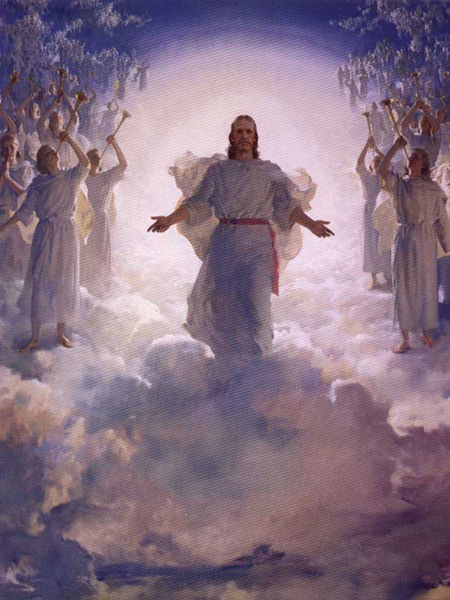
The early Christians and Jews believed that man was not pure enough to enter the Kingdom of Heaven as flesh and blood. They believed all people were transformed into spiritual beings, filling Heaven with angels.


That belief has changed over the centuries, but angels still have an important connection with heaven. In cities all over the world, angels can be seen in watchful poses. "We believe that they are the ones who take care of us. They are the messengers of God. They are the ones who are God's very special friends and his servants," said Cardinal Theodore McCarrick, archbishop of Washington, D.C., and chancellor of Catholic University.


"I always think of heaven as being a place where we won't have any troubles anymore. Heaven is a place where there will be peace and tranquility," McCarrick said. As a Catholic, McCarrick believes heaven is more than a spiritual place. Catholics, he explained, believe the body is resurrected. "I'm looking forward to meeting my mom and dad and the rest of my family," he added.


The Rev. Dr. Calvin Butts, pastor of New York's famed Abyssinian Baptist Church, tells Walters he has had many visions of heaven over the years. He describes heaven as "no tears, no mourning, no suffering. It's eternal joy and happiness because you are at one with God."


Butts says he's certain of heaven's existence, but says it's in an indescribable dimension. "Heaven is in another dimension. So you don't necessarily have to look up but you can look out and see heaven. Heaven is a fourth dimension if you will," he tells Walters.


Imam Feisal Abdul Rauf, founder of the American Society for Muslim Advancement, tells Walters he believes heaven is indeed a physical place, but getting there depends on your behavior in this life. "The real life is the next life … and based upon how we live this life, it determines where we shall be in the next. We are told we will be in comfortable homes, reclining on silk couches … so we're given the delights of sex, the delights of wine, the delights of food with all of their positive things without their negative aspects."


The promise of heaven plays a central role in the life of Pastor Ted Haggard, president of the National Association of Evangelicals, and his congregation. As an evangelical, Haggard believes if you are not a born again Christian, you have no assurance of going to heaven. But if you are "born again" in the belief that Jesus Christ is your personal savior, you are assured a place in Heaven. He also believes that this life is a sort of weigh station on the way to an eternal home. "Jesus Christ guarantees eternal life to anybody that'll follow him. … The purpose of life is to glorify God and go to heaven … 'cause heaven is our home."


Rabbi Neil Gillman, a professor of philosophy at New York's Jewish Theological Seminary, expressed Judaism's perspective on the afterlife. "For the past 2,000 years, most Jews believed that at death the body and the soul separate, the body is interred and disintegrates in the Earth, the soul goes off to be with God," he tells Walters. But that's not the end of the story. "At the end of days, God will resurrect bodies, will reunite body and soul, and the individual will come before God to account for his or her life," Gillman said.


Walters also traveled to India where she met with the Dalai Lama, considered by Buddhists to be the reincarnated Buddha. The Dalai Lama says that the purpose of life is to be happy, and that you can accomplish that by "warm-heartedness." He tells Walters heaven "is [the] best place to further develop the spiritual practice … for Buddhist the final goal is not just to reach there, but to become Buddha. [It's] not the end."


As a Buddhist he believes in reincarnation and tells Walters that people can have second lives as animals. "If someone do[es] very bad, badly … kill or steal … [he] could be born in an animal body." Walters also talks to actor Richard Gere, a longtime follower of Buddhism. Gere tells Walters, "I don't think necessarily heaven and hell happen in some other life. I think it's right now."


The Skeptics and Non-Believers
Walters also speaks with scientists, who say they're beginning to understand why so many people believe in heaven. Still, they have yet to come up with the proof that it exists.


For most people, proof of Heaven's existence is not necessary. Faith is all they need. Dr. Dean Hamer, a geneticist at the National Institutes of Health, thinks he has figured out why this faith comes easily to some, but eludes others. "Whether a person is spiritual or not is not necessarily a matter of their will. It may be something innate about their personality," Hamer tells Walters.


Hamer suspects spirituality might be a personality trait encoded in our genes. He began his research by asking more than 1,000 people to answer a series of questions about faith and spirituality. He then tested DNA from the study participants and found that those who scored highest on his survey had a mutation of at least one gene that seemed to affect their level of spirituality. He named it "the God gene."


"It's a gene that's called VMAT2 and we can isolate it, and we can study it in detail. … This particular gene controls certain chemicals in the brain. And those chemicals affect how consciousness works. They affect the way that our feelings react to the events around us," he tells Walters.


Hamer also notes that researchers have been able to detect changes in the brain when people are in the midst of intense prayer or meditation.


Dr. Andrew Newberg, a neuroradiologist at the University of Pennsylvania, is one of those researchers. Newberg says his research shows a marked increase in brain activity in the frontal regions of the brain. "At the same time," he adds, "the parts of the brain that monitor our sense of time and space became less active."


Newberg says this contributes to an individual's feeling of "losing that sense of self." The feeling, he said, is "attributed to God, for example. And then they feel that God is providing them that energy, that feeling."


But for Ellen Johnson, president of the American Atheists, science or no science, heaven is a myth.


"Heaven doesn't exist, hell doesn't exist. We weren't alive before we were born and we're not going to exist after we die. I'm not happy about the fact that that's the end of life, but I can accept that and make my life more fulfilling now, because this is the only chance I have," she tells Walters.


'Death Trips' to Heaven
Walters also talks with people who feel certain of heaven's existence, apart from their faith, because they believe they've had a glimpse of it in near-death experiences.


A U.S. News & World Report from the late 1990s says as many as 18 million Americans believe they have had near-death experiences that gave them a glimpse of the afterlife.


Dianne Morrissey tells Walters she felt the "white light of God" when she was electrocuted. "My near-death experience changed everything about me. … There is not a single experience on Earth that could ever be as good as being dead," she said.


British psychologist Susan Blackmore has spent decades searching for a scientific explanation: "When the oxygen levels fall in the brain … you get massive over-activity in the brain. … I think there is a true transformation, but not because you've been to heaven."


Family, Children and Heaven
Walters talks with California's first lady, Maria Shriver, whose early experiences with loss as a member of the Kennedy family prompted her to write a book about heaven for children. "I had, growing up, a lot of questions about these deaths that occurred in my family with no person to really talk to them about it," she tells Walters.


"My daughter, who was about 6 or 7 at the time, started asking me a lot of the same questions that I had had as a child, really basic questions: 'Why do you put somebody in a coffin? Where does she go now? Is she scared in the box? Can she breathe in the box?' And what was interesting, Barbara, was that she started answering the questions for herself. So I started writing down her answers," she said.


Walters also talks with Mitch Albom, author of "The Five People You Meet in Heaven," to get his personal take on the afterlife.


Albom tells Walters, "There's one thing I would say about heaven. If you believe that there's a heaven, your life here on Earth here is different. You may believe that you're gonna see your loved ones again. So the grief that you had after they're gone isn't as strong. You may believe that you'll have to answer for your actions. So the way you behave here on Earth is changed. So in a certain way, just believing in the idea of heaven is heavenly in and of itself," he said.


Technorati : ,
Del.icio.us : ,
Ice Rocket : ,
Flickr : ,
Zooomr : ,
Buzznet : ,

Sunday, November 25, 2007

How to keep candles burning longer


Also, for expensive candles, burn them a little until they make a small deep groove in it. Then set a tea-light into it, making sure it cannot be seen. The heat of the tea-light will also give off the smell of scented candles. Tea-lights are extremely inexpensive and can easily be replaced but your large expensive candles are saved.


Store them in the freezer-this will add hours of additional burn time.


Technorati :

Ancient Egyptian Hairstyles


For ancient Egyptians, appearance was an important issue. Appearance indicated a persons status, role in a society or political significance. Egyptian hairstyles and our hairstyles today have many things in common. Like modern hairstyles Egyptian hairstyles varied with age, gender and social status.


Children had unique hairstyles in ancient Egypt. Their hair was shaved off or cut short except for a long lock of hair left on the side of the head, the so-called side-lock of youth. This s-shaped lock was depicted by the hieroglyphic symbol of a child or youth. Both girls and boys wore this style until the onset of puberty. Young boys often shaved their heads, while young girls wore their hair in plaits or sometimes did up their hair in a ponytail style, hanging down the center of the back. Young girl dancers used to wear long thick braided ponytails. The edge of the tail was either naturally curled or was enhanced to do so. If the ponytail was not curled at the end, it was weighted down by adornments or metal discs.


Egyptian men typically wore their hair short, leaving their ears visible. Men often kept these hairstyles until their hair began to thin with advancing age. Another hairstyle for men was distinctive short curls covering the ears shaping a bend from temple to nape. It is doubtful that this hairstyle was natural. It was more likely a result of a process of hair curling that was done occasionally.


Women's hairstyles were more unique than those of men. Women generally preferred a smooth, close coiffure, a natural wave and long curl. Women in the Old Kingdom preferred to have short cuts or chin length bobs. However, women in the New Kingdom wore their hair long or touted a wig. Women tied and decorated their hair with flowers and linen ribbons. A stylized lotus blossom was the preferred adornment for the head. This developed into using coronets and diadems. Diadems made of gold, turquoise, garnet, and malachite beads were discovered on an ancient Egyptian body dating to 3200 BC. Poorer people used more simple and inexpensive ornaments of petals and berries to hold their hair at the back. Children decorated their hair with amulets of small fish, presumably to protect from the dangers of the Nile. Children sometimes used hair-rings or clasps. Egyptians wore headbands around their heads or held their hair in place with ivory and metal hairpins. Beads might be used to attach wigs or hair extensions in place.


Egyptians threaded gold tubes on each tress, or strung inlaid gold rosettes between vertical ribs of small beads to form full head covers. The also used combs, tweezers, shavers and hair curlers. Combs were either single or double sided combs and made from wood or bone. Some of them were very finely made with a long grip. Combs were found from early tomb goods, even from predynastic times. Egyptians shaved with a stone blade at first, later with a copper, and during the Middle Kingdom with a bronze razor.


Slaves and servants were not able to dress the same as Egyptian nobility. The way that they adorned their hair was quite different. Commonly, they tied their hair at the back of the head into a kind of loop. Another type of hairstyle was to tie it in eight or nine long plaits at the back of the head and to dangled them together at one side of the neck and face.


In ancient Egypt, men and women used to shave their heads bald replacing their natural hair with wigs. Egyptian women did not walk around showing their bald heads, they always wore the wigs. Head shaving had a number of benefits. First, removing their hair made it much more comfortable in the hot Egyptian climate. Second, it was easy to maintain a high degree of cleanliness avoiding danger of lice infestation. In addition, people wore wigs when their natural hair was gone due to old age. However, even though the Egyptians shaved their heads, they did not think the bald look was preferable to having hair.


Priests were required to keep their entire bodies cleanly shaved. They shaved every third day because they needed to avoid the danger of lice or any other uncleanness to conduct rituals. This is the reason why priests are illustrated bald-headed with no eyebrows or lashes.


There is evidence of influence from other cultures on Egyptian hairstyles. One example is the cultural union of the Roman Empire and the Egyptian empire. There is evidence of a female mummy wearing a typically Roman hairstyle yet the iconography on her death mask was plainly Egyptian. At Tell el-Daba in Egypt, there was a statue portrayed wearing a mushroom hairstyle that was typical of Asiatic males. There is a statue of young woman in the Ptolemaic periods exhibiting a typical Nubian hairstyle consisting of five small clumps of hair.


Wigs were very popular and worn by men, women and children. They were adorned both inside and outside of the house. Egyptians put on a new wig each day and wigs were greatly varied in styles. The primary function of the wig was as a headdress for special occasions, such as ceremonies and banquets.


Wigs were curled or sometimes made with a succession of plaits. Only queens or noble ladies could wear wigs of long hair separated into three parts, the so-called goddress. However, they were worn by commoners in later times. During the Old and Middle Kingdom, there were basically two kinds of wig styles; wigs made of short or long hair. The former was made of small curls arranged in horizontal lines lapping over each other resembling roof tiles. The forehead was partially visible and the ears and back of the neck were fully covered. Those small curls were either triangular or square. The hair could be cut straight across the forehead or cut rounded.


On the contrary, the hair from a long-haired wig hung down heavily from the top of the head to the shoulders forming a frame for the face. The hair was slightly waved and occasionally tresses were twisted into spirals. In the New Kingdom, people preferred wigs with several long tassel-ended tails, while shorter and simpler wigs became popular in the Amarna period.


Wigs were very expensive. People who could not afford to buy wigs had to use the cheaper hair extensions. Hair extensions were often preferred because they could be tied up in the back. Egyptians considered thicker hair as ideal, so hair extensions were also attached to the wigs to enhance ones appearance.


Wigs were meticulously cared for using emollients and oils made from vegetables or animal fats. Those wigs that were properly cared for lasted longer than those without proper care. Although Egyptians preferred to wear wigs and took care of them, they also did take care of their natural hair. Washing their hair regularly was a routine for Egyptians. However, it is not known how frequently Egyptians washed their hair. Wigs were scented with petals or piece of wood chips such as cinnamon. When wigs were not used, they were kept in special boxes on a stand or in special chests. When it was needed, it could be worn without tiresome combing. Wig boxes were found in tombs and the remnants of ancient wig factories have been located. Since it is believed that wigs were also needed for the afterlife, the dead were buried in the tombs with their wigs.


Wigs were usually made from human hair, sheep's wool or vegetable fibers. The more it looked like real hair, the more expensive it was and the more it was sought after. Wigs of high quality were made only from human hair, while wigs for the middle class were made with a mix of human hair and vegetable fibers. The cheapest wigs were made fully from vegetable fibers. Both wig making specialists and barbers made the wigs and wig making was considered to be a respectable profession. It was one of the jobs available to women. People cut or shaved their hair by themselves or went to the barbers. A barbershop scene is depicted in the tomb of Userhet at Sheikh Abd el-Qurna, where young men are forming a waiting line, sitting on the folding chairs and tripods while the barber is working.


Egyptians used a material called henna (used for nails and lips, too) to dye their hair red. Scientific studies show that people used henna to conceal their gray hair from as early as 3400 BC. Henna is still used today. There is a body of evidence from paintings that depict the existence of people with red hair, such as the 18th Dynasty Hunutmehet. She had distinctive red hair mentioned by Grafton Smith.


Like today, ancient Egyptians were also facing the same problem of hair loss, and they wanted to maintain their youthful appearance as long as possible. There were many kinds of suggested remedies targeting primarily men. In 1150 BC, Egyptian men applied fats from ibex, lions, crocodiles, serpents, geese, and hippopotami to their scalps. The fat of cats and goats was also recommended. Chopped lettuce patches were used to smear the bald spots to encourage hair growth..


Ancient Egyptians also made use of something similar to modern aromatherapy. Fir oil, rosemary oil, (sweet) almond oil and castor oil were often used to stimulate hair growth. The seeds of fenugreek, that plant herbalists and pharmacologists still use today, was another remedy.


Technorati : , ,